
Concreting Contractors in the North East
Concrete looks simple and is not. The mix, the reinforcement, the sub-base underneath and the weather on the day all decide whether a slab lasts thirty years or cracks in the first winter.
We pour foundations, floor slabs, bases and driveways, and we get the boring bit right first, which is the ground underneath it.
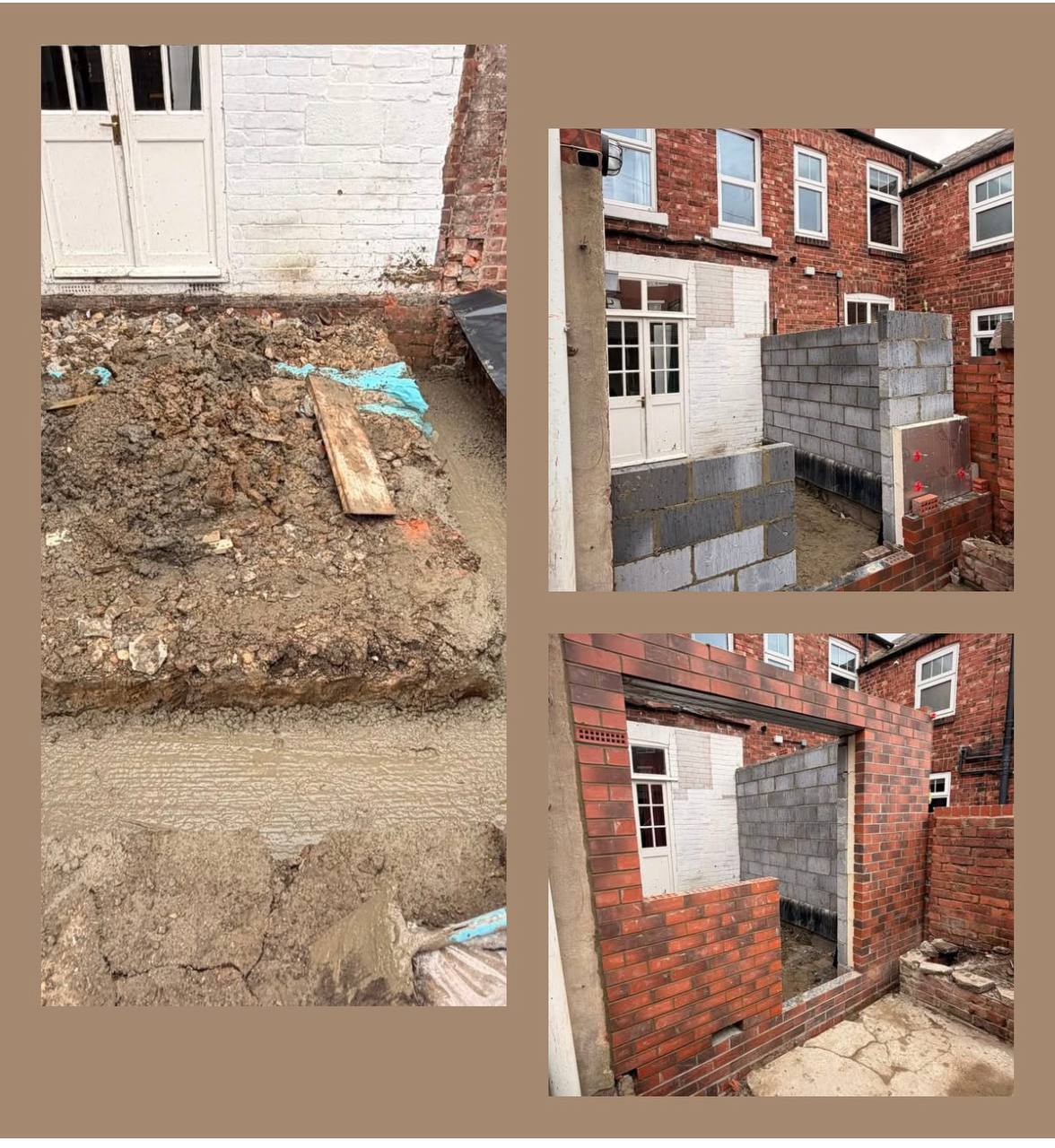
What we take on
- Strip and trench fill foundations
- Ground bearing floor slabs with mesh and DPM
- Garage, shed, hot tub and outbuilding bases
- Driveways, paths and hardstandings
- Reinforced slabs and structural concrete to spec
- Power float and tamped finishes
- Concrete cutting, breaking out and removal
How we do it
Sort the sub-base
Dig out soft ground, hardcore in layers and whacker it properly. A slab is only as good as what is under it, and skimping here is why bases crack.
Formwork and reinforcement
Shuttering set to level, mesh at the right height on chairs rather than thrown in the bottom, and a DPM under anything that will be inside.
Right mix, right day
Correct strength for the job, and we watch the forecast. Concrete poured into a frost or in blazing heat with no protection is asking for trouble.
Pour, level and finish
Tamped, floated or power floated depending on what it is for. Falls set on anything external so water runs off.
Cure it
Covered and kept damp in hot weather, protected in cold. Curing is free and it is the difference between a strong slab and a dusty one.
What it tends to cost
Priced by volume of concrete plus the prep. The prep is usually the bigger number. Access is the other big factor, a pour the wagon can reach is far cheaper than one that has to be barrowed or pumped round the back of a terrace.
Questions we get asked
How thick should a shed or garage base be?
For a garden shed, 100mm of concrete on 100mm of compacted hardcore is normally plenty. For a single garage with a car on it, 150mm with A142 mesh, again on a well compacted hardcore sub-base. If a vehicle heavier than a car will use it, that wants specifying properly rather than guessing.
Can concrete be poured in winter?
Yes, with care. The problem is frost getting into it before it has set, which wrecks the surface. Below about 3 degrees and falling we would either use an accelerator and frost blankets or wait. Up here you have to plan around it, and we would rather tell you to wait a couple of days than pour something you will regret.
Why do concrete slabs crack?
Usually shrinkage as it cures, a poor or uneven sub-base, no reinforcement where it needed some, or too much water in the mix on site to make it easier to work. Fine hairline cracking is normal and harmless. Wide cracks with the two sides at different heights mean the ground underneath has moved, and that is a sub-base problem, not a concrete one.
Where we cover for concreting
Other trades we cover
Want a price on concreting?
Send a few details or give us a ring. We will come and look at it, and you get a written price with no obligation attached.