
Insulation Installers in the North East
Insulation is the cheapest way to cut a heating bill, but it is also the easiest thing to get wrong in a way that causes damp. Warm moist air hitting a cold surface is where condensation and black mould come from, and badly done insulation creates exactly that.
We do it properly, which means thinking about ventilation at the same time, not just stuffing the loft and walking away.
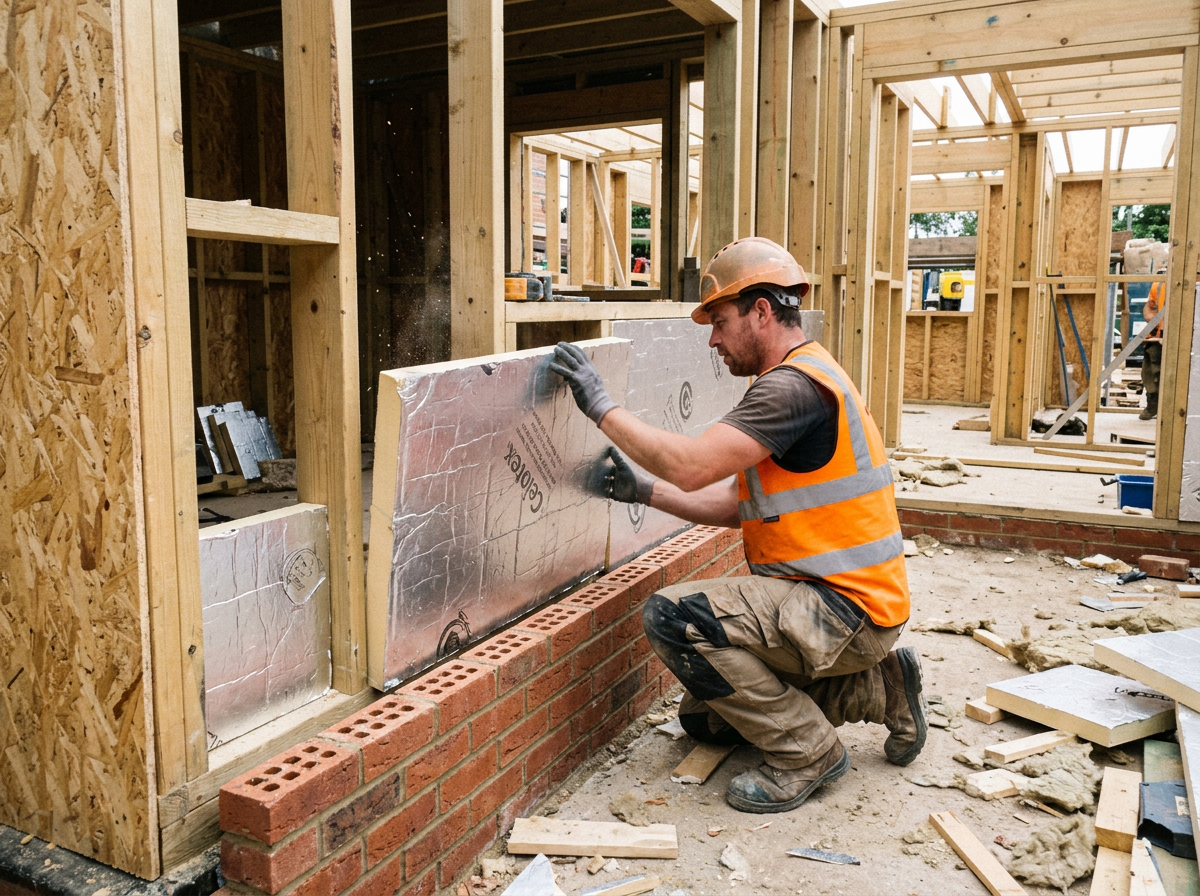
What we take on
- Loft insulation, top up and full replacement
- Cavity wall insulation and cavity clearance where old fill has failed
- Internal wall insulation on solid wall property
- Insulated plasterboard and battened systems
- Underfloor and suspended floor insulation
- Loft hatch insulation, draught proofing and pipe lagging
- Ventilation and airflow so the fabric can still breathe
How we do it
Assess the building fabric
Solid wall or cavity, and if cavity, whether it is already filled and whether that fill has slumped or gone damp. A borescope tells us in five minutes.
Talk about ventilation first
Before we add any insulation we look at where the moisture in the house is going. Extractors, trickle vents, eaves ventilation. This is the step most installers skip.
Install
Correct depth, no gaps, no compression. Insulation squashed under a loft board does almost nothing, which is why we raise the boards rather than flatten the wool.
Detail the cold spots
Loft hatch, eaves, around pipes and at the wall junctions. Cold bridges are where the mould turns up.
What it tends to cost
Loft insulation is priced per square metre and is genuinely one of the best value jobs in building. Internal wall insulation is much more involved because it means stripping back, re-fixing sockets and skirtings, and losing a bit of room size, so it costs considerably more. It is also worth checking whether you qualify for a grant scheme before paying for it outright, and we will point you at that rather than pretend it does not exist.
Questions we get asked
How thick should loft insulation be?
Current recommendation is 270mm of mineral wool. A lot of North East houses still have 100mm or less from the seventies and eighties, which means the top up pays for itself quickly. Lay the second layer at right angles across the joists so there are no gaps, and do not block the eaves, the loft needs airflow or you will get condensation on the underside of the roof.
Can every house have cavity wall insulation?
No, and this matters up here. Exposed properties on the coast or high ground taking driving rain from the east can suffer wind driven rain crossing a filled cavity and coming through to the inside wall. Anything built before about 1920 usually has no proper cavity at all. If a house is heavily exposed, internal or external wall insulation is the safer route even though it costs more.
Will insulating make my condensation and mould worse?
It can, if ventilation is ignored. Insulation keeps warm moist air in the house, and if that air has nowhere to go it condenses on whatever surface is still cold, usually a window reveal or a corner. Done properly, with extraction in the kitchen and bathroom and the cold bridges detailed out, insulation actually reduces mould because the wall surface is no longer cold enough for water to form on it.
Where we cover for insulation
Other trades we cover
Want a price on insulation?
Send a few details or give us a ring. We will come and look at it, and you get a written price with no obligation attached.