Damp is one of the most misunderstood problems in a house, and one of the most oversold. Plenty of homeowners get talked into an expensive damp proof course when the real problem was a leaking gutter or a bit of blocked airflow. Before you spend a penny, it is worth understanding what actually causes damp, because the fix depends entirely on the type.
The three types of damp
Nearly all damp falls into one of three camps, and they look different once you know what to look for.
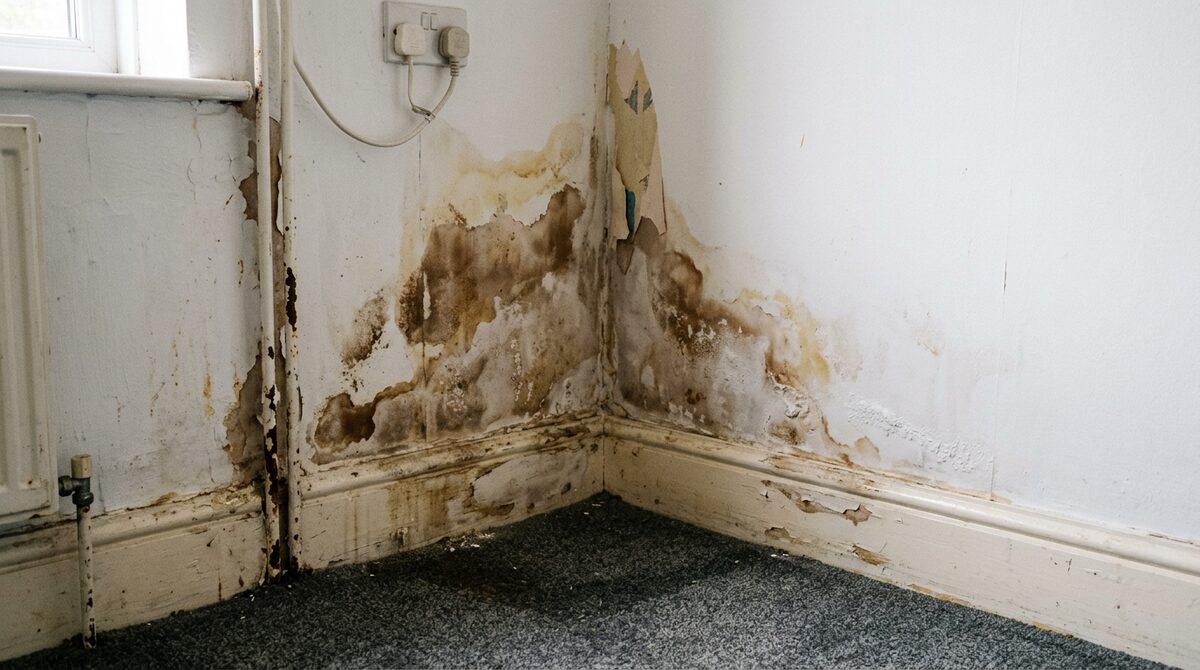
- Penetrating damp. Water getting in from outside through a fault, like worn pointing, a cracked render, a broken gutter, a slipped roof tile or a dodgy window seal. It usually shows as a damp patch in one spot that gets worse when it rains. - Rising damp. Ground water creeping up through the wall where the damp proof course has failed or is bridged. It shows as a tide mark low down on the wall, usually no higher than about a metre, sometimes with a white salty deposit. - Condensation. By far the most common, and nothing to do with the structure. Warm moist air from cooking, showers and drying clothes hits a cold wall or window and turns to water. It shows as black mould in corners, behind furniture and around windows.
Why condensation gets misdiagnosed
Here is the honest bit the trade does not always tell you. A huge amount of what gets called rising damp is actually condensation, and no damp proof course in the world will fix it. Our homes up here are cold and often poorly ventilated, we dry washing indoors through the winter, and modern draught proofing has sealed houses up tighter than they used to be. That traps moist air, it hits the coldest surface, and you get mould. The fix for that is ventilation and heat, not injecting the walls.
How each type is actually fixed
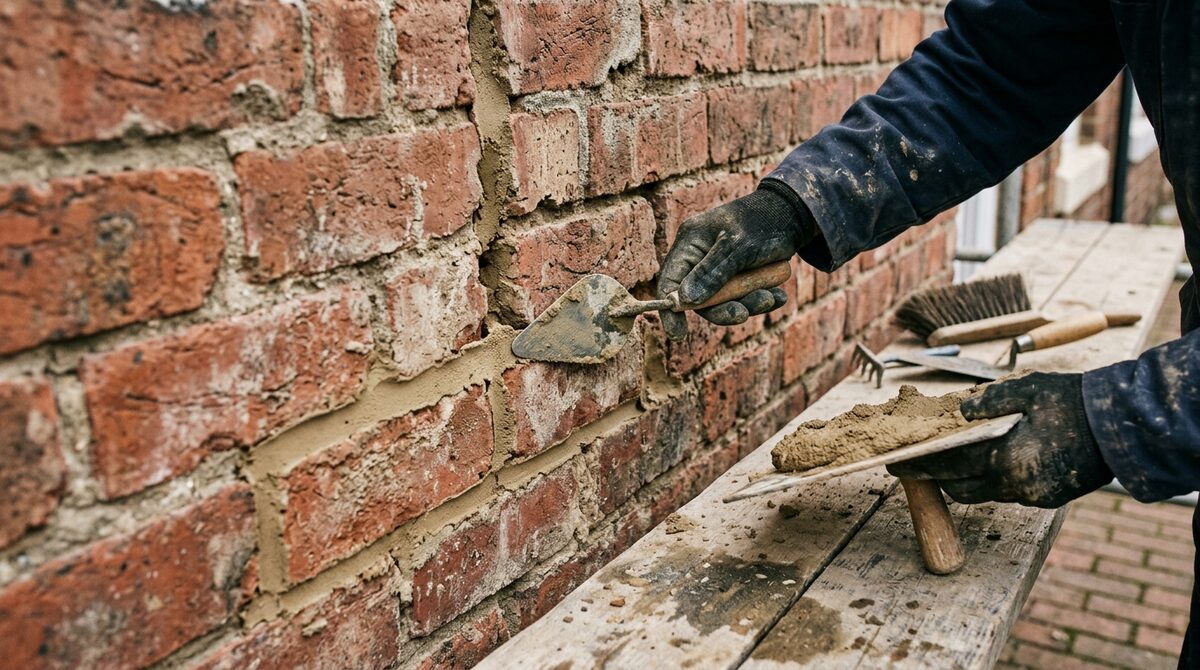
Penetrating damp is fixed by finding the fault and sorting it. Repoint the wall, fix the gutter, replace the tile, seal the window. Once the water is kept out the wall dries and the damp goes. Rising damp, where it is genuinely happening, needs a new damp proof course, and often the removal and replacement of salt contaminated plaster inside. Condensation is fixed by improving ventilation, adding extractor fans that actually run long enough, sometimes trickle vents or a positive input ventilation unit, and keeping a bit of background heat in through the winter.
The key point in all of it is diagnosis. Anyone who quotes you for a damp proof course without properly checking whether it is even rising damp is guessing, and you could pay thousands to fix a problem you never had.
What we do
We come out, find where the water is actually coming from, and tell you which type of damp you have got. Then we give you the fix that matches the problem, whether that is repointing, sorting the guttering, a genuine damp proof course, or improving the ventilation. No selling you a big job you do not need.
We deal with damp in homes across Newcastle, Sunderland, Durham, Gateshead and the wider North East. If you have got a damp patch, a musty smell or black mould creeping in, get us out for a look before you spend money guessing.
Keystone Construction Group. The right fix for the real problem. Call 07587885335 or visit keystone.abacusai.app.
Got a project in mind?
Have a chat with us about your build. No pushy sales, just honest advice from a team that knows the North East.