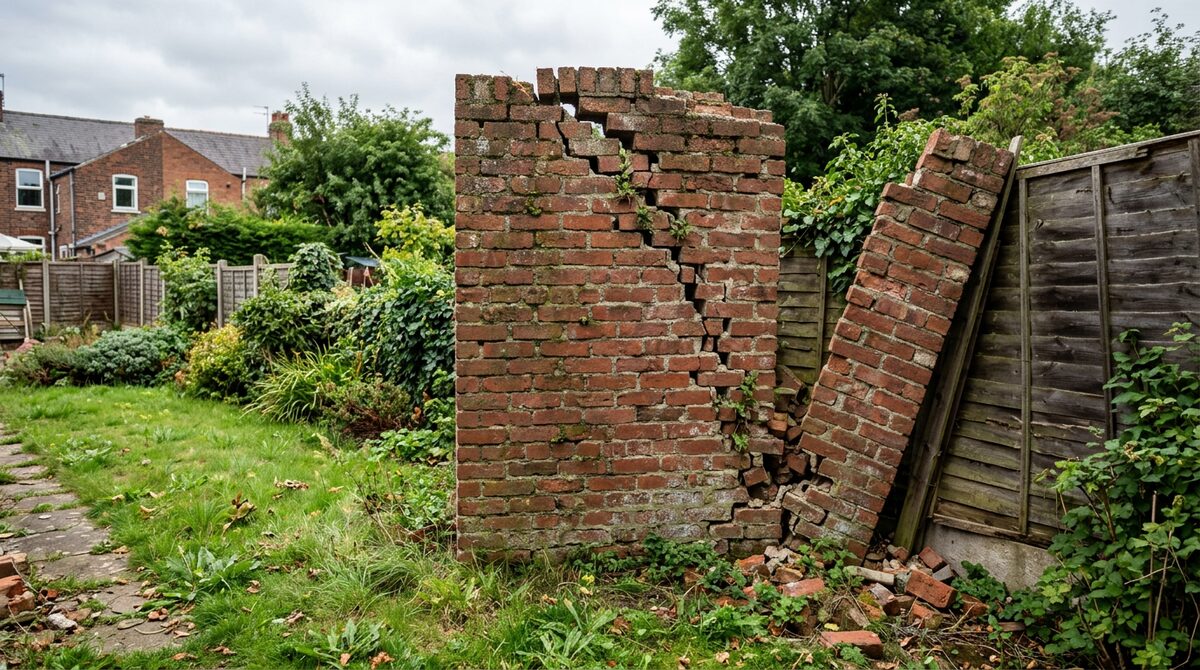
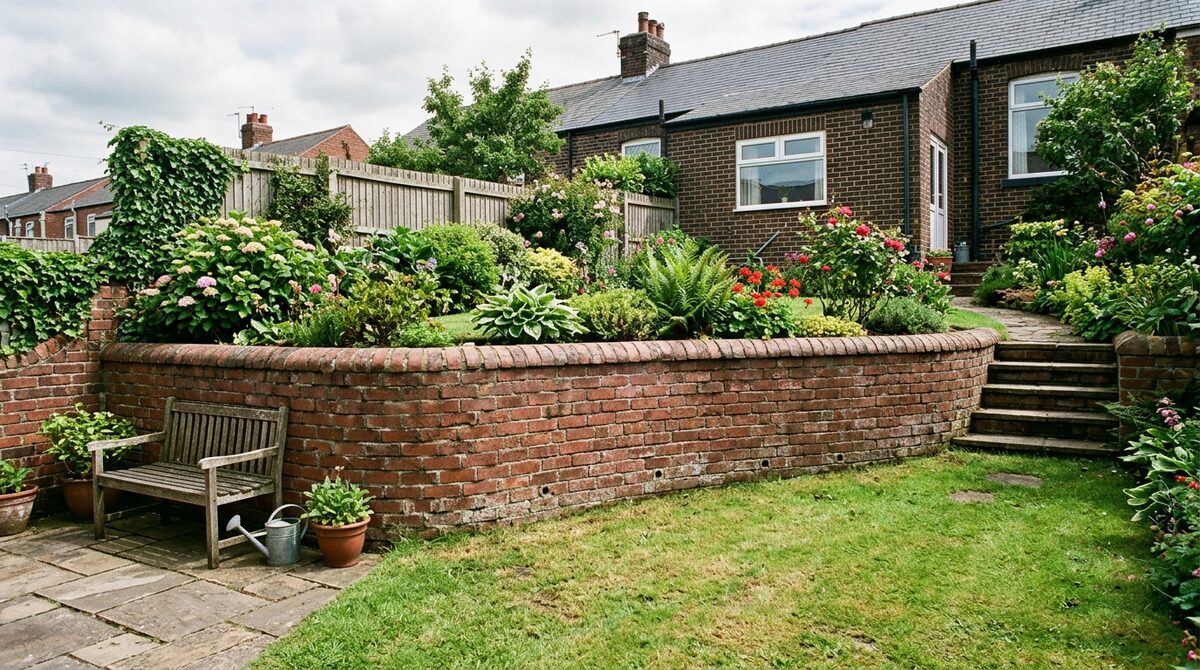
A retaining wall looks like any other wall from the front, but it is doing a completely different job. It is holding back a bank of earth, and when that soil is wet it weighs an enormous amount and pushes hard against the wall day and night. Get one built properly and it stands quietly for decades. Get it wrong and it bulges, cracks and eventually gives way, often taking the garden or driveway above it with it. With plenty of sloping sites around the North East, this is work we get asked about a lot.
Why retaining walls are different
An ordinary garden wall only really has to hold itself up. A retaining wall has to resist the constant sideways pressure of the ground behind it, and that pressure goes up massively when the soil is waterlogged. That is why you cannot just build a taller version of a normal wall and hope for the best. It has to be designed and built to push back against that load, and to let water escape rather than let it build up.
The things that make one last
There are a few non negotiables on a proper retaining wall, and they are exactly the bits that get skipped on a cheap job.
- A solid, properly sized foundation, because the whole wall relies on what it sits on - The right thickness and often reinforcement for the height it is holding back - Drainage behind the wall, usually a layer of stone and a land drain, so water does not build up - Weep holes through the wall to let any water that does gather escape at the front - The right materials, whether that is engineering brick, concrete block or stone, to cope with constant contact with wet ground
Why drainage is the bit that catches people out
If we could point to the single biggest cause of retaining walls failing, it is water. When drainage is left out, rain soaks into the soil behind the wall and has nowhere to go. That waterlogged ground is far heavier and pushes far harder than dry soil, and it just keeps pushing. Sooner or later the wall starts to lean or bulge and then it is only going one way. Building in proper drainage from the start costs very little compared to the wall itself, and it is the difference between a wall that lasts and one that fails.
Height and when the rules kick in
For lower garden retaining walls it is usually straightforward. Once a retaining wall gets higher, generally over about a metre, or where it is holding back ground near a building or a boundary, it may need proper structural design and building control involvement. That is not red tape for its own sake, it is because a wall that size failing is dangerous. We will tell you early on whether your job falls into that bracket and sort the right approach.
We design and build retaining walls, terracing and sloping garden projects across the North East, from a low wall to hold a raised bed to serious structural retaining for driveways and split level gardens. If you have got a bank that needs holding back or a wall that is starting to lean, get us out for a look and we will tell you what it needs.
Keystone Construction Group. Built to hold, built to last. Call 07587885335 or visit keystone.abacusai.app.
Got a project in mind?
Have a chat with us about your build. No pushy sales, just honest advice from a team that knows the North East.